A custom website in the USA costs between $3,000 and $35,000 for most businesses in 2026, with a typical small-business custom site landing between $5,000 and $15,000. Simple landing pages start below that, custom eCommerce stores commonly run $8,000–$35,000, and fully custom web applications start around $25,000 and can exceed $100,000. The biggest cost drivers are the number of pages, custom design versus templates, eCommerce or booking features, third-party integrations, and who writes the content.
This guide breaks those numbers down by website type, explains where the money actually goes, shows you how to estimate your own project, and helps you avoid the most common budgeting mistakes US businesses make.
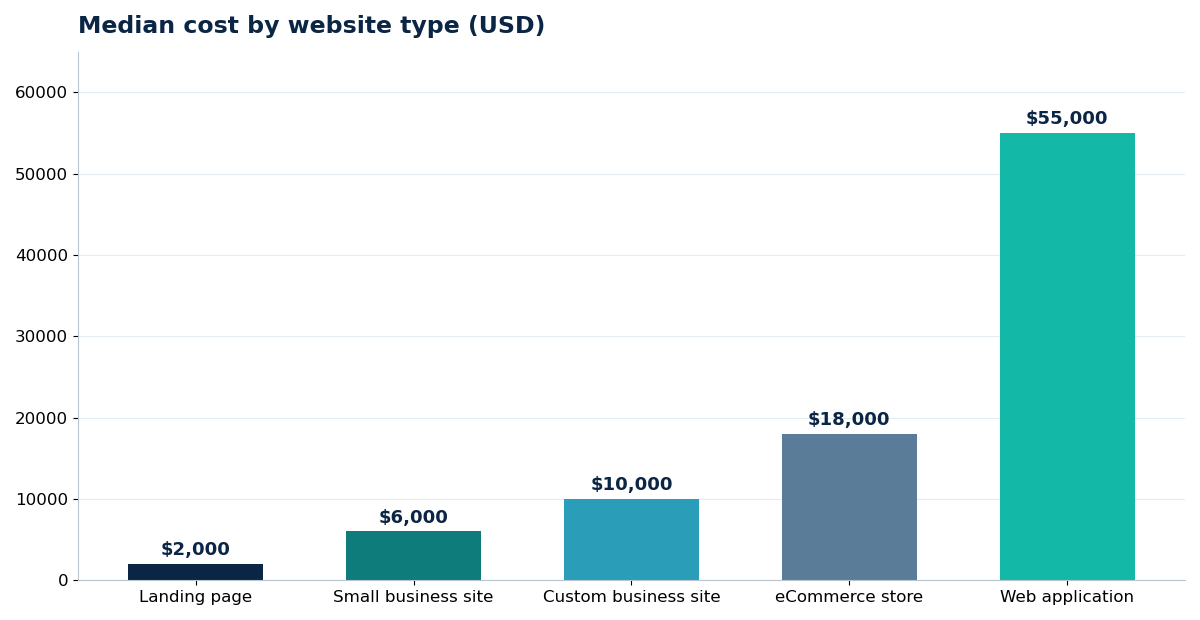
Quick Answer: Website Prices by Type in the USA (2026)
| Website type | Typical 2026 market range (USD) | Typical timeline | Best for |
|---|---|---|---|
| Landing page / one-pager | $800 – $3,500 | 1–2 weeks | Campaigns, lead generation, MVPs |
| Small business website (5–10 pages) | $3,000 – $9,000 | 2–4 weeks | Local services, consultants, trades |
| Custom business website (10–25 pages) | $5,000 – $15,000 | 4–8 weeks | Growing companies that need a distinct brand |
| Corporate / content-heavy website | $12,000 – $30,000 | 6–12 weeks | Larger firms, multi-location, blogs and resources |
| eCommerce store (WooCommerce / custom) | $8,000 – $35,000 | 6–12 weeks | Retailers, D2C brands, B2B catalogs |
| Custom web application / portal | $25,000 – $100,000+ | 3–6+ months | SaaS, dashboards, ERP, customer portals |
Market ranges, 2026. Template-based DIY builds sit below these ranges; large US agencies often sit above them.
What Are You Actually Paying For?
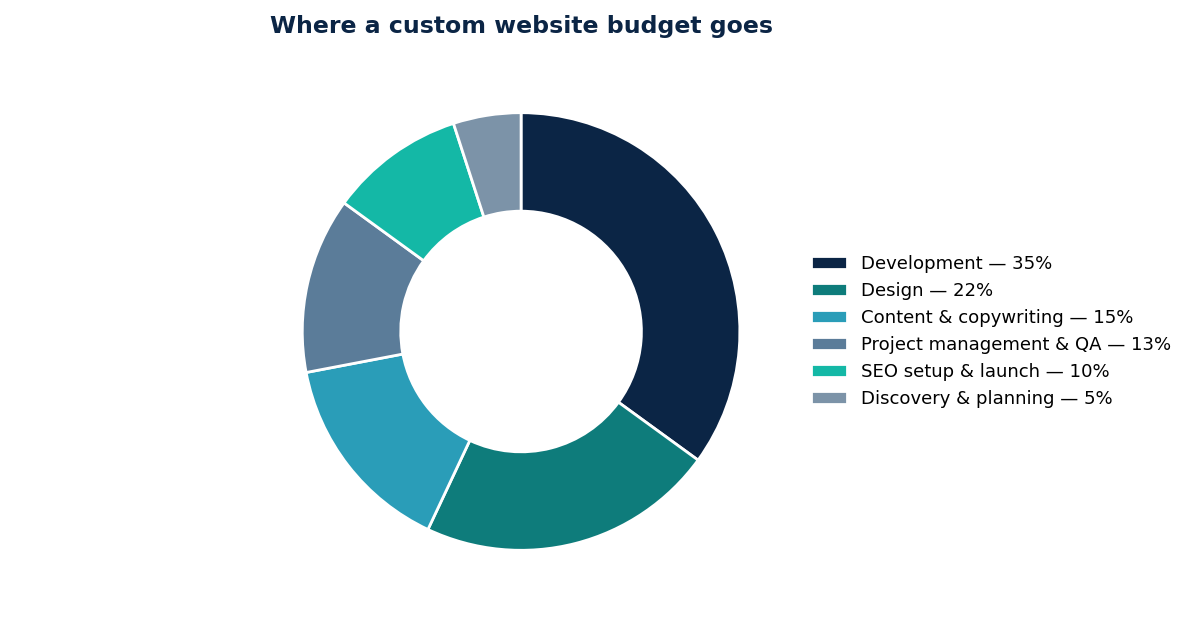
A website quote is not one item. It is a bundle of distinct pieces of work, and understanding the split helps you compare quotes fairly instead of comparing a total price against a completely different scope.
1. Strategy and planning
Discovery, sitemap planning, and deciding what each page must achieve. Skipping this stage is the most common reason a cheap website has to be rebuilt within a year.
2. Design
Custom design costs more than adapting a template because every layout is drawn around your brand, your content, and your conversion goals. In the US market, custom UI design typically accounts for around a fifth of a project budget.
3. Development
Turning designs into a working site: responsive layouts, a content management system such as WordPress, performance optimization, forms, and integrations. For custom web applications built with frameworks such as Laravel or Next.js, development is usually the largest single cost.
4. Content
Copywriting, photography, and product data. Many businesses underestimate this line. If you supply finished copy and images, you save money; if the developer must create or clean them, budget for it.
5. SEO setup and launch
Technical foundations — metadata structure, sitemap, analytics, redirects, and speed work — plus pre-launch testing. These are one-time setup costs that protect your long-term search visibility.
Freelancer, Agency, or Offshore Development Partner?
US agency rates are the highest of the three, often $100–$200 per hour, which is why agency quotes for the same scope can be two to three times higher. US freelancers commonly charge $50–$125 per hour. A growing number of US businesses work with experienced overseas development partners — including studios like Asad Webs — where senior-level WordPress, WooCommerce, Laravel, and Next.js work is billed at lower rates because of lower operating costs, not lower skill.
The honest trade-offs to weigh:
- Communication: insist on clear English, written briefs, and regular demos regardless of location.
- Timezone: overlapping working hours matter less than a reliable update rhythm.
- Portfolio and process: judge by shipped work, a written scope, and a staging link — not by postcode.
- Total value: a $7,500 site that loads fast, ranks, and converts is a better buy than a $20,000 site that does none of those.
Ongoing Costs Most Budgets Forget
The build is only the first invoice. Plan for these recurring US costs:
| Ongoing item | Typical annual range (USD) | Notes |
|---|---|---|
| Domain name | $12 – $30 / year | .com at standard registrars |
| Hosting | $120 – $600 / year | Shared at the low end; managed/VPS for custom apps |
| SSL certificate | $0 – $100 / year | Often free via Let's Encrypt |
| Maintenance & updates | $600 – $3,000 / year | Updates, backups, security checks, small fixes |
| Content & SEO work | $500 – $2,500 / month (optional) | Blog content, landing pages, technical SEO |
Skipping maintenance is false economy: unmaintained WordPress sites are a leading target for hacks, and a single cleanup plus lost sales can cost more than a year of care.
How to Lower the Cost Without Lowering the Quality
- Start with fewer pages, done properly. Five strong pages beat twenty thin ones for both budget and SEO.
- Arrive with content ready. Finished copy and organized product data remove the slowest, most billable part of most projects.
- Use the right platform. WordPress and WooCommerce cover most business and store needs at a fraction of custom-build cost. Reserve Laravel or Next.js builds for genuine custom workflows, portals, and applications.
- Phase the features. Launch the core site first; add booking, memberships, or advanced filters in phase two once revenue justifies them.
- Reuse free tools for prep work. Check your draft pages before launch with a free Meta Tag Analyzer and keep your copy at a healthy keyword balance with a Keyword Density Checker.
Try It: Interactive Website Cost Estimator
Use this estimator to model pages, design level, and features — it mirrors the ranges in the table above.
Website Cost Estimator (USA, 2026)
Estimated range: $4,200 – $7,600
Indicative market estimate only. Get an exact quote for your scope.
Red Flags in a Website Quote
- No written scope, page list, or revision limits
- No mention of who owns the domain, hosting, and website files
- "SEO included" with no deliverables listed
- No staging preview before launch, and no post-launch support window
- A price far below every other quote with no explanation of what is excluded
A useful pre-launch discipline is to work through a structured checklist — the WordPress Business Website Launch Checklist in the Asad Webs shop was built for exactly this, and the Website SEO Metadata Worksheet helps you plan titles, descriptions, and alt text page by page before anything goes live.
Conclusion
In 2026, most US businesses should budget $5,000–$15,000 for a quality custom website, $8,000–$35,000 for eCommerce, and $25,000+ for a custom web application — plus $800–$3,500 a year to host, maintain, and protect it. The right number for you depends on pages, features, and content, not on the headline price of the cheapest quote.
If you want a scoped, written quote instead of a guess, Asad Webs builds fast, SEO-ready WordPress and WooCommerce sites and custom Laravel and Next.js applications for clients internationally, with clear pricing agreed before work begins. Tell us about your project and get a cost breakdown for your exact pages and features.
Frequently Asked Questions
How much should a small business budget for a website in 2026?
Most small businesses should budget $3,000–$9,000 for a professionally built 5–10 page website, plus $600–$1,500 a year for hosting and maintenance. Complex features, custom design, and copywriting push the figure higher.
Why do website quotes vary so much?
Because scope varies more than price tags suggest. Page count, custom design versus templates, eCommerce, integrations, content creation, and the provider's hourly rate all change the total. Always compare written scopes, not headline prices.
Is WordPress cheaper than a custom-built website?
Yes, for most business and store websites. WordPress with WooCommerce covers the majority of needs at a lower cost. A custom Laravel or Next.js build costs more but is worth it for portals, dashboards, ERP-style workflows, and applications with unique logic.
How much does website maintenance cost in the USA?
Typically $50–$250 per month ($600–$3,000 per year) for updates, backups, security monitoring, and small fixes. eCommerce and custom applications sit at the higher end because they need more frequent testing after updates.
Can I build a website myself for less?
Yes — DIY builders can cost under $500 a year — but you pay with your time, and template sites often underperform on speed, SEO structure, and conversion. Most growing businesses move to a professional build once the website becomes a real sales channel.
Be the first to share a useful question or thought.